The Silent Killer Continued…..

So, I am attaching an image from the American Heart Association that visualizes the major points that blood pressure effects. There’s hardly an internal organ that does not escape it’s effect somehow. Think of your blood pressure as a plumbing system that has to maintain pressure, which is exactly what it is!
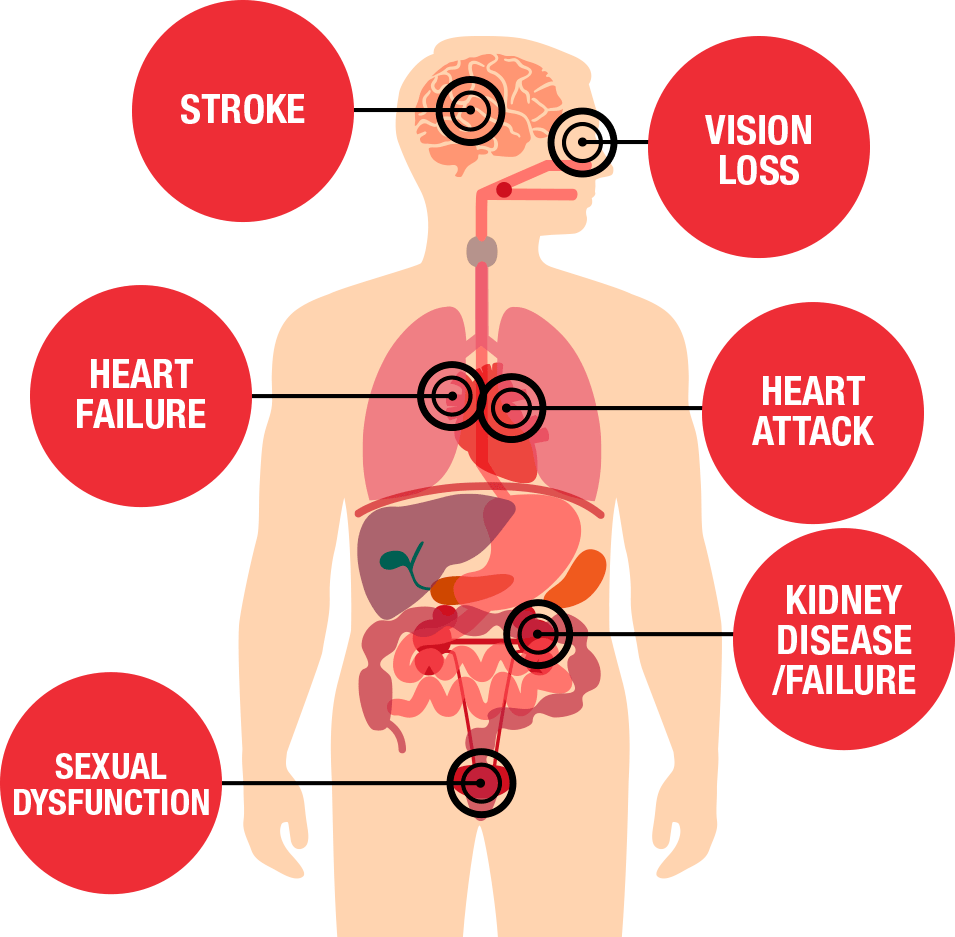
Source: American Heart Association (AHA)

The one common denominator in all of the images above is that they all contain vessels, that transport blood back and forth to the heart. Some of those are arteries and are very tiny and very sensitive to pressure changes. The HEART eventually fails because the pressure is to great to keep up the pace. It can’t pump that hard all the time. High Blood pressure causes arteries to scar and become blocked causing a HEART ATTACK (think stretch marks, with plaque forming on them). The increased pressure eventually damages the arteries in the kidney, which is a constant filtering system, making it difficult for them to remove waste and help regulate your blood pressure (they do that too!!). Unfortunately for males, it makes for a really bad day for bedroom shenanigans (no further explanation needed). It also damages the arteries in the eyes, increasing vision loss. And finally, it can cause a vessel to burst in your head, or become clogged, causing a STROKE—a LIFE-CHANGING event. One of the greatest causes for admission to a nursing facility!

IT IS IMPORTANT to maintain your blood pressure! It should NEVER be shrugged off as not important because you don’t feel well, because you are damaging your insides, whether you feel it or not.

A hypertensive crisis occurs when you have a blood pressure over 180/120 and are symptomatic—headache, blurry vision, chest pain, chest pain, nausea/vomiting, numbness or weakness or other stroke-like symptoms. CALL 911–do NOT attempt to drive yourself to the hospital! Treatment can be initiated earlier with the EMS, you will not have to WAIT in the ER—yes wait, and you won’t have a heart attack on the way to the ER causing a wreck! TRUST ME!

Things to do to reduce your risk, CUT DOWN ON SALT, DRINK WATER-NO SODA, eat, veggies and lean meats, eat a DASH diet or Mediterranean diet. EXERCISE! Maintain your cholesterol. Check your blood pressure, visit your PCP for an annual physical with labs. See the link below for the CORRECT way to check your blood pressure…Now you are pressure wise! No pressure though..😂

https://www.heart.org/en/health-topics/high-blood-pressure/understanding-blood-pressure-readings/monitoring-your-blood-pressure-at-home

Sources: https://www.heart.org/en/health-topics/high-blood-pressure/health-threats-from-high-blood-pressure

Watercolor, 2021

The Silent Killer

Blood Pressure…. Everyone has one but is the one you have good or not? How do you know? For starters, most people will tell you, “I don’t have high blood pressure because I don’t feel bad”. MOST of the time, people will have NO SIGNS of high blood pressure until they are in a hypertensive crisis (more on that later). Case in point, I recently had a very spry, active, elderly gentleman in my clinic, NO COMPLAINTS—he needed to have bloodwork done for the VA. So as part of his visit we did routine vital signs. He was found to have a resting blood pressure of 210/110- that is most certainly stroke level, however, his response to me was, “I feel fine”. I am sure he did!

So WHAT is blood pressure? Blood pressure is the amount of blood pushing on the walls of you arteries. The top number is the measurement of pressure as the blood is coming out of your heart and is exerting “force” on the walls of your arteries. The bottom number is when the blood is coming back into your heart, this is when your heart is at rest and your pressure should be at its lowest. Arteries are little muscles, they clamp down to raise your pressure, and open up to lower your pressure (just like a plumbing system in your home!). This is in response to various signals from your body. If you’re dehydrated and need more water then your arteries clamp down to keep your pressure raised. If you’ve had too much salt and the accompanying water that follows, then your arteries try to open up to accompany all of that volume. There are many variations to this—but it is truly AMAZING that are body has this ability without us knowing or thinking about it!

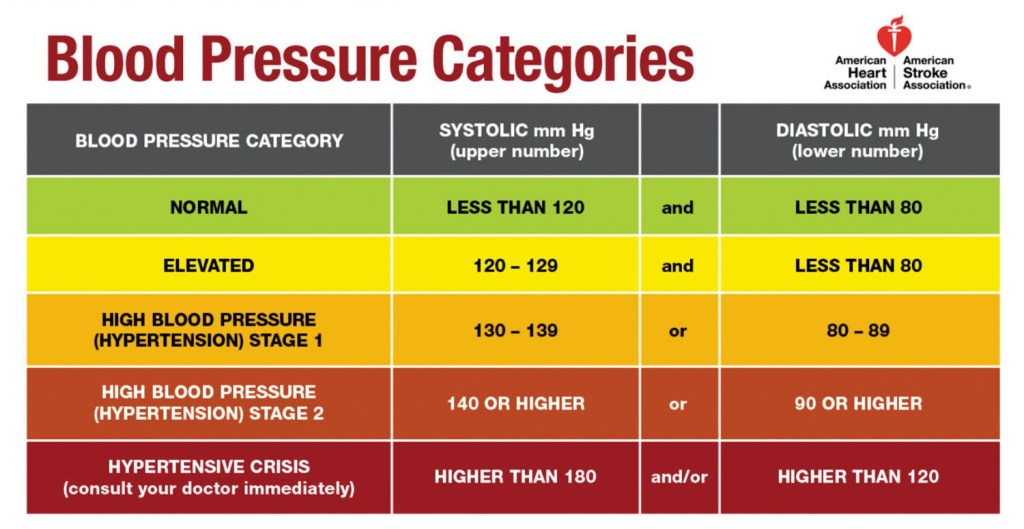
What is a “normal” blood pressure 120/<80, is the criteria for the American Heart Association (AHA). Now as a practicing provider, there are many variations to this “rule” based on age, health status, health problems, and race. However, most guidelines specify treatment almost always at 140/90-150/90. Diabetics will get treated sooner and younger. Below is a chart for blood pressure categories.

Source: AHA

As you can see it shows numbers for a “hypertensive crisis”, most people are still ASYMPTOMATIC-meaning feeling OK-even at this pressure.

Signs and symptoms of high blood pressure

  • Flushing in the face, turning red or feeling hot
  • Feeling dizzy
  • CHEST PAIN-see heart attack symptoms on prior post
  • Spots in the eyes or blurry vision
  • Severe or persistent headaches
  • Stoke like symptoms, facial numbness, balance issues, weakness on one sid

It IS IMPORTANT TO TREAT HIGH BLOOD PRESSURE—YOU CANNOT CURE IT! You can make it better in some instances with lifestyle changes. However, some people are genetically inclined to have it. I treat otherwise healthy 20-year olds for blood pressure.

IF YOU EVER FIND YOURSELF HAVING ANY OF THE ABOVE SYMPTOMS, PLEASE SEEK OUT MEDICAL TREATMENT IMMEDIATELY.

NEXT post will explore the effects of blood pressure on the body, lifestyle factors that cause it, and things you can do to improve yours, and medical treatments for blood pressure.

Source: American Heart Association https://www.heart.org/en/health-topics/high-blood-pressure/why-high-blood-pressure-is-a-silent-killer

Goodbye Fall! November, 2022

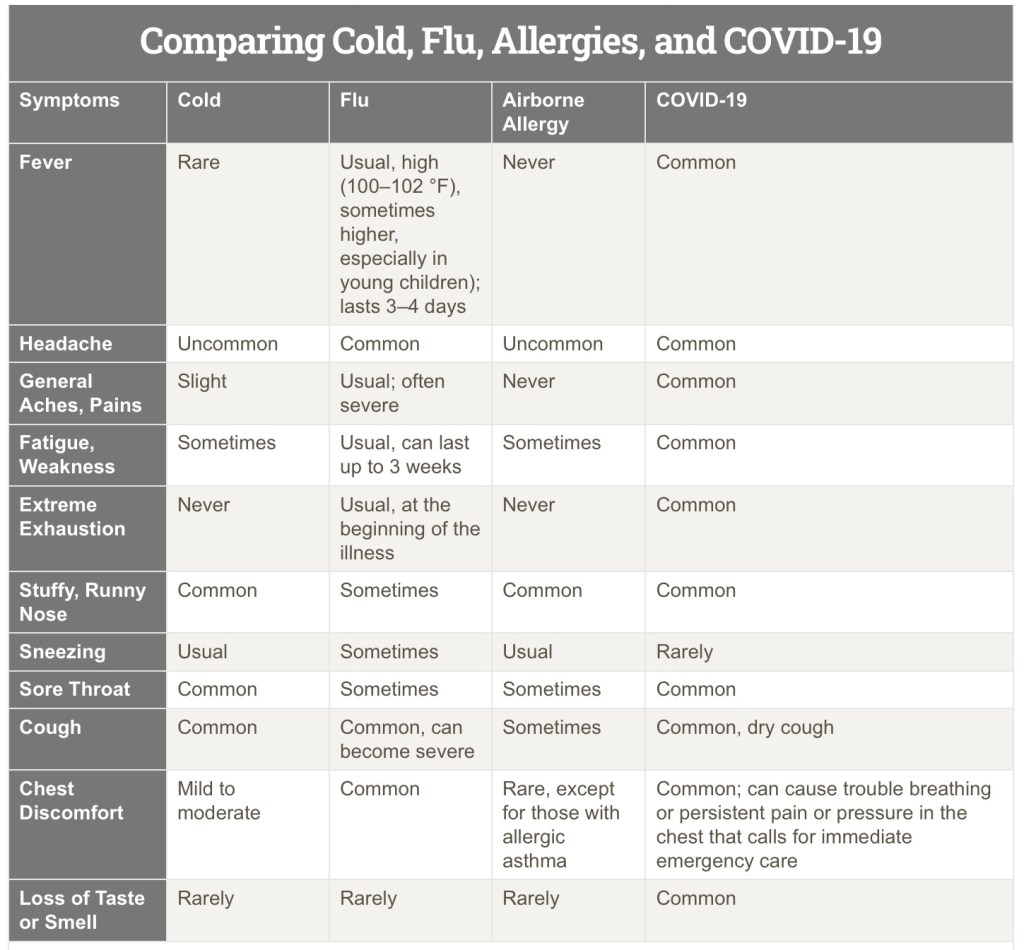
Is Cold, Flu, allergies, Covid, or just Confusion?

So, it’s the season for snots!! I mean LOTS A SNOTS! So what am I seeing in the clinic? Flu, some Covid, and colds! What’s surprising to people is that when their Covid and Flu test are negative they look at you like, “What’s wrong with me?”. Well, once upon a time, we did have cold’s! Somehow since Covid, people seem to have forgotten that and have forgotten that their own immune system will cure a cold without fancy drugs! I often get, “You mean, I don’t get a prescription?”, well no— You don’t need one!

We Can treat Covid with Paxlovid, the flu with Xofluza or Tamiflu, and good old-fashioned cold with over-the-counter remedies! All of these add rest and fluids. Below I’m attaching a chart from the National Institutes of Health that discusses the differences between them.

If you find yourself with a prolonged illness, please see your PCP, as ANY viral infection can turn into a bacterial infection if snot lingers long enough!

Source: National Institutes of Health

https://newsinhealth.nih.gov/2022/01/it-flu-covid-19-allergies-or-cold

Now go wash your hands and use that sanitizer! You are virus wise!

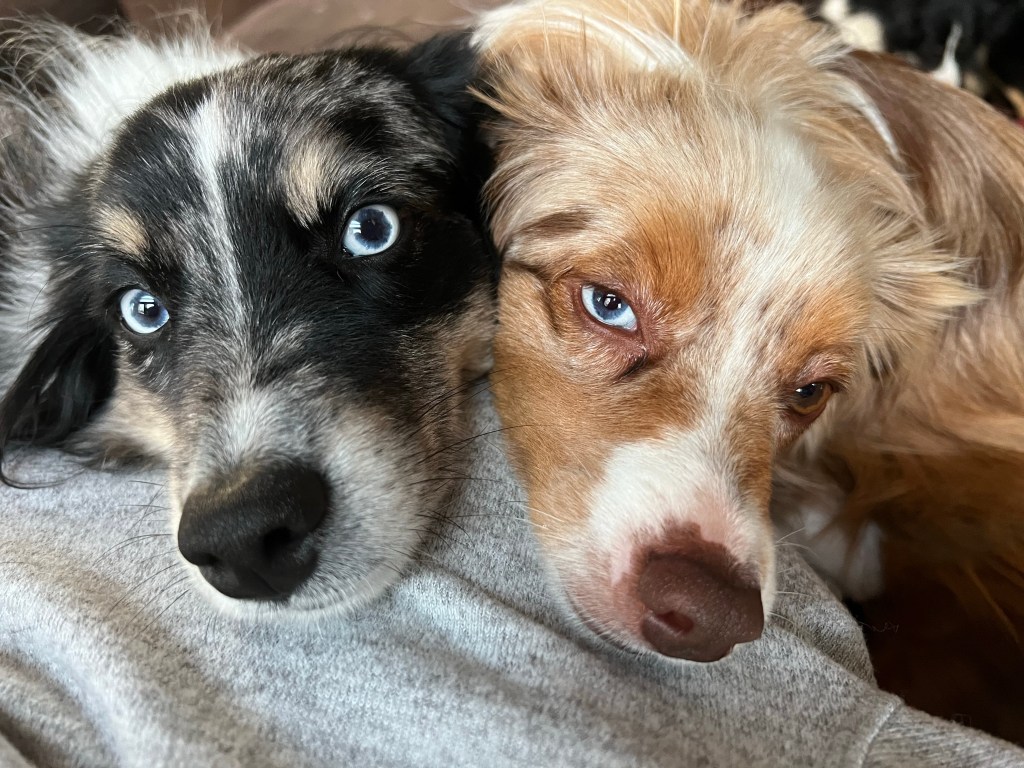
Blue and Indy, Aussie’s, Double Trouble!

Health Benefits as Sweet as Honey! 🍯

Alright, hopefully I convinced that honey IS amazing!!! Let’s get down to the benefits of honey!! SO yes honey is about 25% sweeter than regular sugar, it is not empty calories. As, I had said before, it does contain, vitamins, minerals, proteins, amino acids, and organic acids. So, eating honey can obviously have benefits just from the ingredients! But let’s get specific!

Antioxidants According to the National Institutes of Health, honey has the ability to provide natural antioxidants. Antioxidants prevents aging and damage to cells, when cells go through oxidizing stress then age and damage. It appears that the darker the honey the more antioxidant compounds that it has. Science is just beginning in this area but it looks to be promising to preventing damage to cells and to help in treating chronic conditions. One way to visualize the oxidation process is the rusting of metal—So in a way the honey would keep us from rusting! I mean, not really, but you get the point!

Antibacterial Without getting very technical, honey has a lot of physical properties that make it difficult for it to grow germs-including a low water content, super sweetness, and those bees actually produce a little bit of hydrogen peroxide when they make it! 😳 I told you those bees were amazing! But anyway, those same properties that keep it from spoiling also are used to inhibit bacterial growth. We do use honey to prevent growth in wounds. It is known that Manuka honey prevents the growth of Staph and E.Coli. Manuka honey comes from Australia and New Zealand form a bush related to the tea tree. The bacterial properties of Manual honey is 100 times higher than traditional honey.

Apoptotic Activity (Anticancer) So that same, fancy Manuka honey is also being studied as a possible cancer treatment. In very basic terms, it causes some cancer proteins to stop working and increases some anticancer proteins! And it does this naturally! So, I am not saying tha honey is a CURE for cancer! But it is known that it does have anticancer properties. Future studies in this area may lead to better treatments of cancer using the honey compounds! But we CAN EAT it now!

Anti Inflammatory and Immune Defense According to the National Institutes of Health, honey can also prevent inflammation in our joints. This is the primary cause of arthritis and joint pain, along with many other inflammatory diseases in the bowel and elsewhere. It is also suggested that honey helps to increase your immune response by a very complicated cellular system.

Other uses Other uses of honey have included diabetes, type I and type II treatments, wound healing, and asthma and allergies. There are many research articles to validate the research on the topics. This list in not inclusive of all the benefits of honey. It does show you, however, how amazing the organic molecules that make up honey can be. I don’t eat enough honey, but my husband eats it almost everyday. I will say this, I’m not sure an apple a day keeps the doctor a way, but a tablespoon may. I think I’ll buy some Manuka honey-it can’t hurt! After all the bees have been doing it for thousands of years!! And now you are honey wise!

Sources: https://www.ncbi.nlm.nih.gov/pmc/articles/PMC5424551/ https://www.medicalnewstoday.com/articles/324997 https://health.clevelandclinic.org/manuka-honey-benefits/

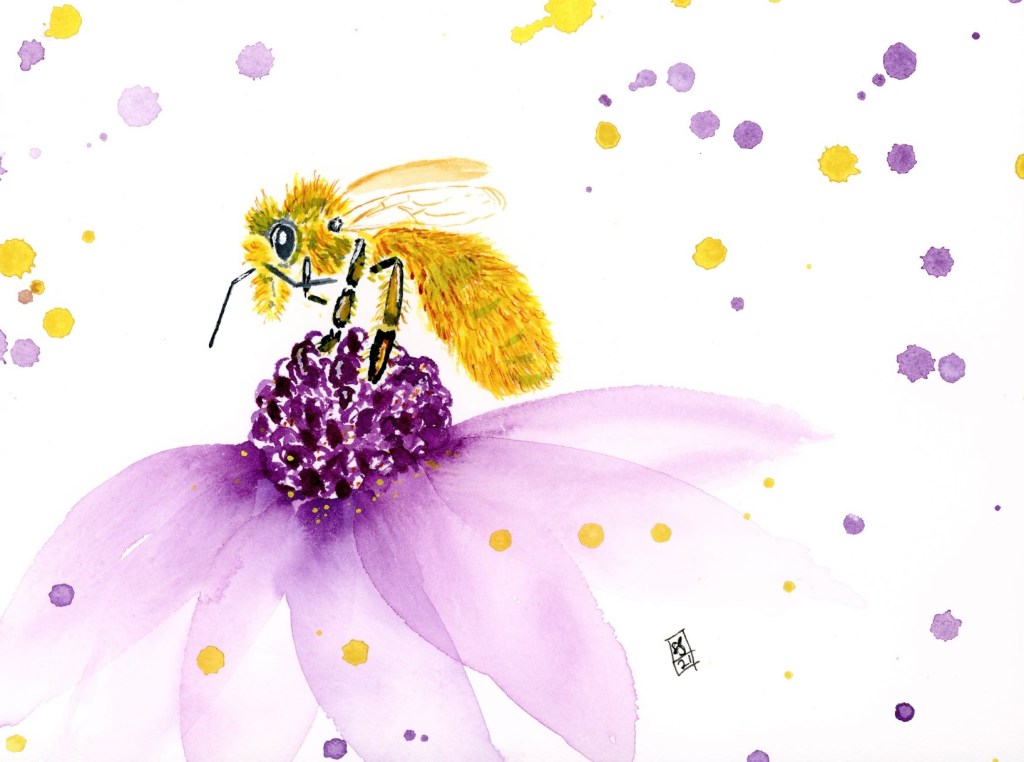
Watercolor, 2021

Sugar pie, Honey Bun….🍯🐝🍯

If only bees could talk! They would undoubtedly rave about their products!! Imagine a product that is bacterial, anti inflammatory, anti cancer, and antioxidant properties—all in one! And from a product that tastes good and is “all natural”. It almost sounds too good to be true! But remarkably it’s not! The bees would probably be mad that we steal all of their gold and sell it for our profit and well-being, but then again maybe they made some of it for us!

So let’s talk honey! It is a remarkable substance, in addition to health benefits the bees work hard to make it! They have a “honey stomach” that they store the nectar in, when they get back to the nest, they mix it with their enzymes and regurgitate it several times before refining it into honey—this process takes about 20 minutes, and takes over a 1000 flowers to fill up their honey stomachs! Then the bees have this really cool way to heat up the honey, warm the water content, and then flap their wings create a supercooled environment to evaporate the remaining water and make the honey super dense! This process brings the water content to 15-18%, making it spoil-proof-unless you get water in it! Simply amazing! I mean we knew bees were amazing but did we really know HOW amazing they were? We just thought the hives we amazing!

So how beneficial is honey? A 2017 article from the National Institutes of Health done a vast search of research articles and literature to find uses of honey in medicine. It mentions that the oldest know use of honey goes back to 8000 BC in Spain to a cave painting of someone harvesting honey! So at least, 10000 years ago! After carbs, honey contains many nutrients! Proteins, vitamins, minerals, organic acids and amino acids. That’s a lot of stuff! There are over 320 different varieties of honey in the world and some have better uses than others. On average, an active hive will produce 65 pounds of honey a year.

Have I convinced you yet that honey is amazing and the BEES are even MORE amazing???? Hopefully I have, the next post will be on the benefits of honey. This post became long because I was so amazed by honey I could stop writing!! So now you are honey wise!

Come back for PART II!‘

Sources: https://www.ncbi.nlm.nih.gov/pmc/articles/PMC5424551/ https://en.wikipedia.org/wiki/Honey

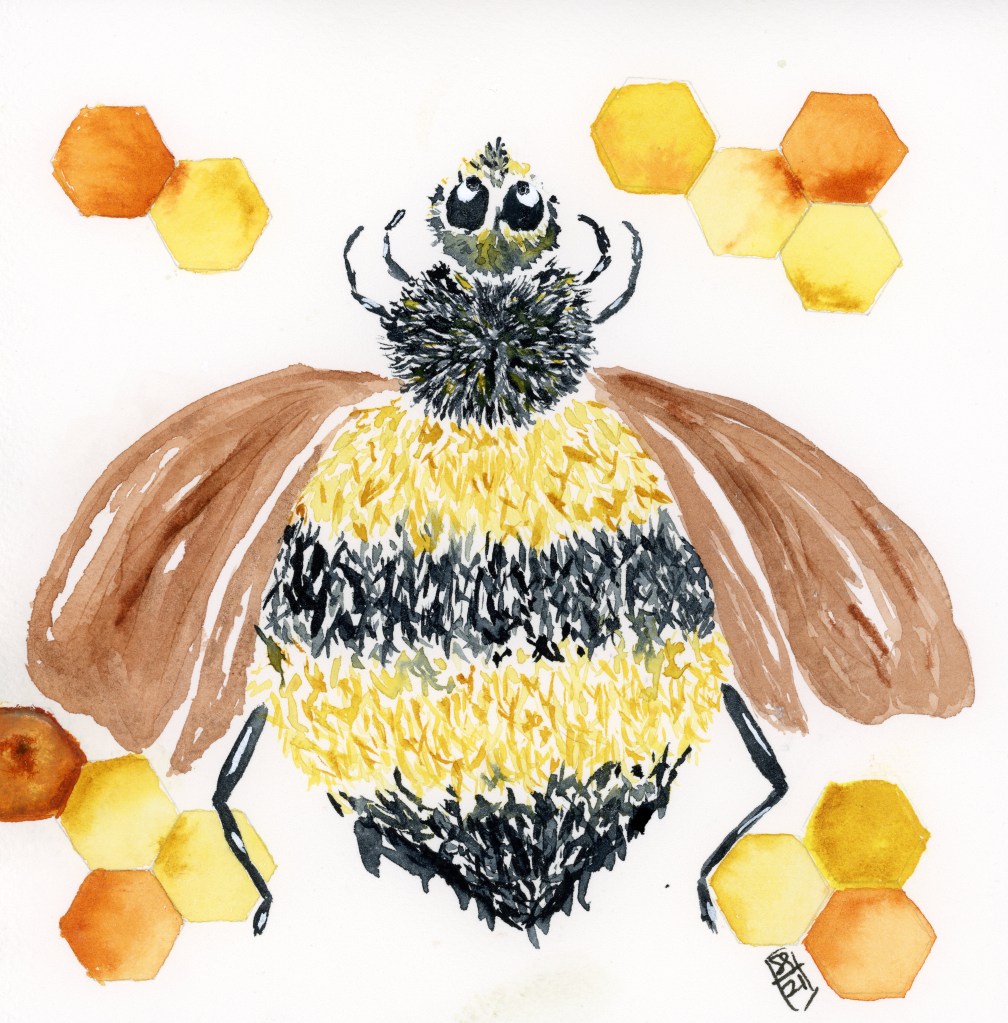
ChubBee, Watercolor, 2021

Female Chest Pain, not a broken heart!

Most people identify chest pain with the crushing pressure or elephant setting on your chest. Did you know that heart disease is the NUMBER ONE killer in the US for women? I bet if you are a woman, you didn’t know that….1 in 5 deaths for women are related to heart disease. I get the feeling that a lot of you feel that heart disease is more of a man’s disease though, that’s why I’m trying to wisen you up today!

First, let’s talk about PREVENTABLE risk factors for heart disease—YES PREVENTABLE! Diabetes, overweight and obesity, smoking, excessive alcohol use, physical inactivity, and unhealthy eating. Does any of those apply to you? We’ve already discussed activity and diet, and I suspect you all are are aware of the dangers of smoking, obesity and excessive alcohol. We still haven’t had a discussion regarding diabetes, but just being a diabetic increases you risk of heart disease and being a poorly controlled one increases it even more. Also, cholesterol—we talked about those numbers, what they mean and how to keep them down—get to work!

So female presentation of chest pain doesn’t always show up as typical crushing chest pain-the kind we often see in men. It is more sneaky and often easier to dismiss as something else. Heartburn, muscle pain, bad sleep, stress, etc. Women are notorious for putting things off, to keep up their roles as caretakers for the family. They may ignore symptoms they think are other things but that can be very serious. Nausea and vomiting, chest pain (not always), neck pain, jaw pain, pain in upper back, fatigue, indigestion, fainting, shortness of breath, or pain in the upper abdomen can be signs of a heart attack in women. They may only have ONE of these symptoms or they may have more than one.

IF YOU THINK YOU ARE HAVING A HEART ATTACK: CALL 911! Don’t wait! Seriously! Do not drive yourself. EMS personnel can provide life-saving treatment at your home, in your home, immediately! If you go to the ER, you will not get inside quickly, you may have to wait—Don’t wait! If you have aspirin laying around, CHEW one up and swallow it. This will help you to prevent clot formation during a heart attack.

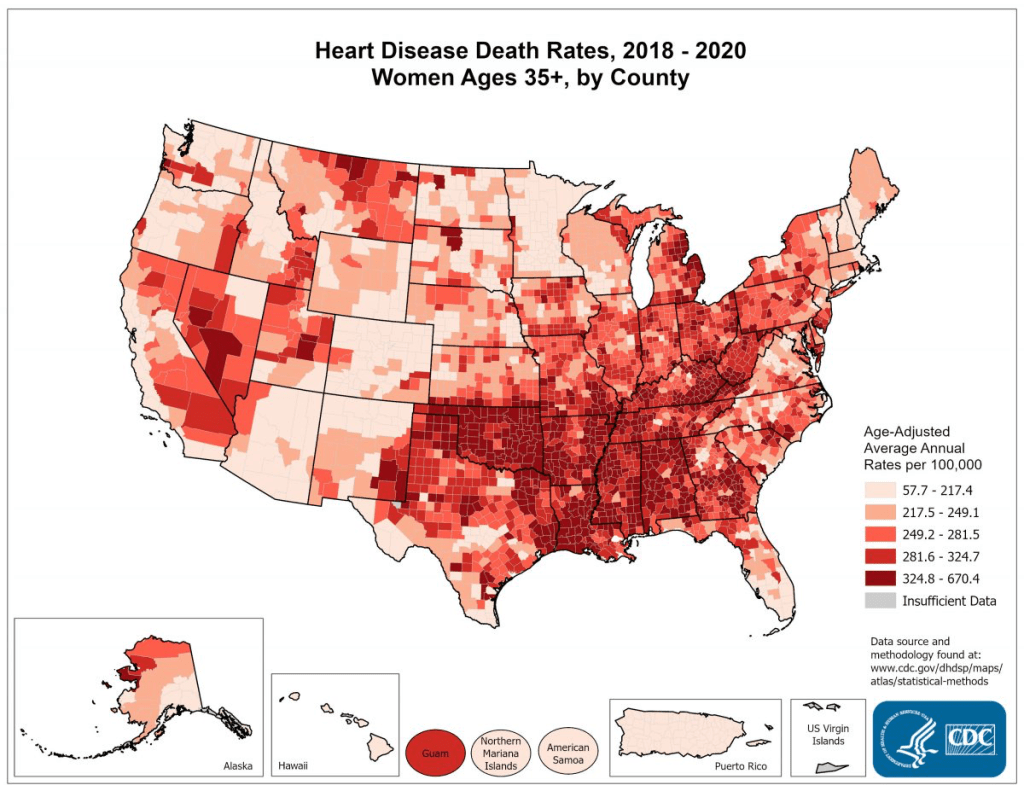
Hopefully, this short post will bring to your attention some of the differences with women and chest pain. A lot of this is preventable. I’m going to post a couple of good graphics, the first is female heart disease deaths by county 2018-2020. The darker the color the worse is is-the southeast glows!!! The second is a visual of the chest pain differences between men and women from the American Heart Association. Be heart wise!!

Source: CDC
Source: American Heart Association, Go Red for Women

Sources: https://www.goredforwomen.org/en/about-heart-disease-in-women/signs-and-symptoms-in-women/symptoms-of-a-heart-attack. https://www.cdc.gov/heartdisease/women.htm https://www.health.harvard.edu/heart-health/aspirin-for-heart-attack-chew-or-swallow

Love is in the Air, or not..💔 💵 💰

The advent of the internet has brought some amazing things to our lives! Can you say DoorDash, Walmart pickup, grocery deliveries, etc. But the very downside of the internet seems to effect the elderly and young both. Scammers, have been around since medieval times! Back then, merchants would weight the scales for goods to make you spend more! Today, scammers are a little more savvy, as they make things seems very real, when the reality is they are very fraudulent and sneaky. You are probably saying to yourself, I don’t know anyone who could fall for this. But there are people in the surrounding counties who have wired or transferred sums as high as $100,000 to “people in need”, who are actually total strangers and theirs they have met on Facebook or other similar websites. It is more common than you think, but you don’t hear about it because of the shame and stigma that people carry after it happens. My own grandmother, was a victim of this by mail, sending thousands of dollars in checks to sweepstakes, with the promise of winning the next $50,000. I interceded as much as I could but they were relentless, and with a touch of dementia she was gullible! Not a good combination!

There has been such a high number of fraud committed against seniors that the FBI has even created a special task force to help deal with the sheer numbers of victims. Seniors over 70 are the group that loose the most money with an average of $9000 per scam. In 2021 Americans lost $547 MILLION dollars to romance scams! The most common forms of this are simple phone calls or internet scams.

Phone calls are a frequent method, sometimes, it will be a caller who claims to be a relative, who is in great trouble or danger and needs a ransom to be released. Frequently, this person will pretend to be a grandchild. HANG UP! This person may require a money transfer, bank wire, or request bank account information. NEVER GIVE OUT YOUR BANK INFORMATION OVER THE PHONE, unless you initiated the call to the respected bank or financial institution. Sweepstakes are also a known source of scams. Legitimate sweepstakes WILL NEVER require you to pay them-EVER! You should never have to pay them to get your “chance” to win $50,000 or whatever, this is a scam. The IRS will also NEVER CALL YOU-They tend to send nice little certified letters! Please do not fall for these scams!

They will often lure people in with an innocent enough Facebook request from the opposite sex. Most of the time, they will be a decorated “war veteran or hero” or doctor that is just looking for friendship. They will live overseas somewhere or work internationally. It will ALWAYS be a place where they will be unable to have direct face-to-face contact. There is also a huge Nigerian population claiming to be a “prince” or “royalty” of some sort. They will initially reach out, usually talking about their children or grandkids, and they will almost always have lost a spouse or loved one. These conversations progress rapidly when they find out that you are alone or widowed yourself. They start out with flattery and kindness, not stop chatting, talking about your grandchildren, and your mutual loss or need for “friendship”. They will write “poems” for you, or may even send you a small gift with a note attached. This is called “love bombing”. They often hit them right at their most vulnerable spot, and play on it hard. But the flattery and affection the victim feels outweighs any warning signs their gut feelings have because they feel “connected” to that person and “they understand me”. These people will eventually become sick or have some type of emergency and need funds. Most of the time, they want to “BORROW” or have a “temporary advance” on the money, so it makes the victim feel as though they will be paid back They may also want a wire transfer but they also use gift cards as forms of payment, these are harder to trace. The loss is eventually emotional and financial!

The AARP even has a website detailing the dangers of Nigerian scams, PLEASE click the link!!! https://www.aarp.org/money/scams-fraud/info-2019/nigerian.html.

There is also a website called https://socialcatfish.com/ that can verify if you are interacting with a real person for a small fee. This may be more useful for a family member that has its doubts than the actual person if they are really under the influence of the scammer.

This post is to raise AWARENESS of the problem. To let you be aware that we need to watch out for our seniors, parents, and grandparents. These people are vulnerable to fraud because sometimes they are lonely. Covid has made us even more isolated. Grab a friend , a loved one, a neighbor, talk to them, engage them, PREVENT them from being a statistic. Fraud, depression, suicide-all of these are products of loneliness and anxiety and the loss of a human touch-we can all be better humans-hopefully today we are just more wise! 💕🦉

PLEASE TAKE TIME TO LOOK AT THE LINKS! THEY PROVIDE A WEALTH OF INFO!

Sources: https://www.getcarefull.com/articles/how-to-protect-aging-parents-from-romance-scams#:~:text=Losses%20related%20to%20romance%20scams,this%20age%20group%20at%20%249%2C000. https://www.fbi.gov/how-we-can-help-you/safety-resources/scams-and-safety/common-scams-and-crimes/romance-scams https://www.comparitech.com/identity-theft-protection/senior-scam-statistics/ https://fightcybercrime.org/scams/imposter/romance-scams/

PRICKLY PEAR CACTUS ❤️, 2022

October is Breast Cancer Awareness Month

October is Breast Cancer Awareness Month! Most of you reading this has a loved one that has been affected by breast cancer. Cancer is the second leading cause of death in the United States, 25% of all deaths in the United States are related to Cancer. It is estimated that women will have a 13% chance of developing breast cancer in their life, and a 1 in 8 chance of developing breast cancer in their lifetime. Of the 4 girls, including myself, that was on my senior high school trip, one has already succumbed to breast cancer. To say breast cancer is everywhere is an understatement. Even men can get breast cancer!! That’s why knowing about and screening for breast cancer is so important!

Screening for breast cancer has at least 2 different recommendations. The United States Preventative Services Task Force (USPSTF) recommends routine screening every 2 years if a woman wants to, starting at age 40-49 and routine screening every two years after age 50, to stop at 74. The American Cancer Society recommends routine annual screening mammograms 40-55 and then you can go to every two years if wanted, only to stop at age 74. Over 75 is not recommended by either. Clinical breast examination (exam by your PCP in the office) is not recommended by either.

Mammograms have saved countless lives, and are covered by your insurance as part of your routine screening. These services are typically covered by Medicare and Medicaid. If you find yourself insured, most health departments offer some screening mammograms a year for free. There are also lost cost cash-pay options available at most hospitals and radiology centers. While mammograms are uncomfortable, they are often very short-lived and most last less than 15 minutes. But this small amount of time can save your life!

What is breast cancer? Breast cancer is simply when cells grow out of control. Signs and symptoms of breast cancer can be lumps, dimpling, nipple discharge, change in shape, thickening of breast or pain. You can also have no signs and symptoms and have cancer. Many women have natural lumps in this breast that are cysts or dense tissue in the breasts. Some women have dense breasts, breasts that have thicker tissue inside and may require additional images after their mammogram to make sure the densities aren’t cancer. Historically, having a history of dense breast tissue does increase your risk of having breast cancer, so it is important to follow through with your follow up images. Breast cancer can either be localized or metastasized—meaning spread to other parts of the body.

If you do have an abnormal mammogram it will more than likely be followed up with an ultrasound and if that is suspicious they will do a biopsy to determine what kind of cancer you have in your breast. Finding the type of cancer in your breast is essential to getting the correct treatment.

There are several times of breast cancer and determining what type you have is essential to the treatment you get. The are 4 major types are Estrogen receptive, progesterone receptive, and HER2 receptive. The last one is called “triple negative” because it is unreceptive to any of the above three receptors, making it harder to treat, but not impossible. So the types and treatments are like locks and keys, you have to have the correct treatment for the type of cancer you have. Treatments vary on the severity of your cancer from radiation, chemotherapy, surgery, immunotherapy and others. Many patients find themselves in clinical trials as new and better treatments for breast cancer are being developed all the time.

The bottom line on breast cancer is that it is everywhere and will more than likely affect someone you love and care about in your lifetime! Screening and prevention is the key to survival. THE EARLIER THE BETTER! Follow the recommended guidelines, and if you are uncertain, please discuss with your PCP. There are free and low-cost options available to help you. If you know someone that has avoided mammograms, I encourage you to encourage them to be breast wise!

Sources: https://www.cdc.gov/cancer/breast/index.htm https://www.cancer.org/cancer/breast-cancer/about/what-is-breast-cancer.html

Cacti Family, Watercolor, 2021

October 10th is National Mental Health Awareness Day!

Awareness of mental health issues has become more prevalent over the last 10 years or so. Mental health struggles are also more socially accepted in society than they have ever been. My teenage daughter can rattle off a whole litany of mental health diagnoses and associated symptoms. In my high school years, I could barely talk about anxiety or depression, and it seemed to be associated with great shame or stigma. Flash forward, 25 years or so, and things have greatly changed, but there is still room to be made.

Today we will talk a little about depression, as it is one of the most common mental health diagnoses and struggles that we deal with in primary care. Approximately, 10% of all PCP visits have depression listed as a diagnosis. Women are more likely to be depressed than men and suicide has increased at an alarming pace with the 15-24-year-old age group by 87%, 2000-2020. In 2019 alone, 18% of adults reported that they had some symptoms of depression. The biggest fear of depression is suicide, in the same year, 45,000 suicides were reported.

So what is depression exactly? The National Institutes of Health (NIH) describes it as sad, depressed, anxious, empty, hopeless, worthless and helpless. These are very common symptoms of depression that you may be able to readily identify with depression. However, let’s discuss some of the more uncommon symptoms we see in primary care that can be attributed to other things but really are depression related. Fatigue, irritability, changes in appetite, sleeping too much, difficulty concentrating, headaches, cramps, and digestive issues. Sometimes, physical symptoms are a direct result of your body dealing with depressive feelings. The worst and most irreversible is suicide. It is contemplated by the young, old, rich, poor, sad, and sometimes the most “happy” looking people. Robin Williams was known for putting on a smiling, happy, face but he ultimately took his own life, which was a surprise to many people because of his perceived persona. Your PCP may have you take a quiz in the office called a PHQ-9 to determine your feelings in the last 2 weeks. This score will help them to decide if you meet depression criteria. The higher the score, the more likely you are to suffer from depression.

Treatment for depression can include many things. The most common treatments are meds and counseling. Although exercise and eating healthy have been shown to have benefits for mental health. In primary care medications are frequently prescribed as treatment. They can be very effective in treating depression, and as a provider I have had the opportunity to see big changes in people’s lives from medicines. I want to encourage you to do a few things if you try a medication. First, give it time to work, these medicines take several weeks to reach their maximum effect. Second, these medicines don’t work the same for everyone, it may take several attempts at different dosages, or medicines to get it right. Most of the time, we find the right one. Find a provider that will see you frequently enough, to “get it right”. And finally, if you feel suicidal on medications, CALL your provider! Counseling is often the first recommended treatment and really helps you to dig deep and deal with the roots of your depression, however, with the large numbers of depression it often takes a while to get to see a counselor or therapist. A lot of times, providers start medications in the meantime. This list is not inclusive, however most people find some help with either of these treatments.

HELP! If you feel as though you may be at the end of your line please know that help is literally A PHONE CALL AWAY!

IF YOU TEXT OR CALL 988, SOMEONE WILL HELP YOU-RIGHT NOW!

Below is the questionnaire used by professionals as a baseline for depression scoring. If you find yourself answering yes to these questions, please schedule an appointment with provider to discuss depression. It DOES NOT look the same to everyone, and it’s possible that the feelings you can’t quite put a finger on, maybe depression. There is help for you.

PHQ-9, https://www.cambridgebrainsciences.com/more/articles/measure-depressive-symptoms-with-the-phq-9

Sources: https://www.mayoclinic.org/diseases-conditions/depression/diagnosis-treatment/drc-20356013. https://www.nimh.nih.gov/health/publications/depression many years of nursing experience.

Fluid Art, 2022

Hello Sunshine! Or not….

Let’s talk tanning beds and sunscreen! I literally feel the heat on me now! But seriously, some of you out there have been tanning regularly since you were teenagers. I frequently hear, “it feels good, it makes my joints feel good, it clears up my skin “, etc. Undeniably, there are instances when this may “feel” like this is the best thing in the world, and in rare instances some dermatologists make make a recommendation for brief stints in the tanning bed. But when I tell you they are generally horrible, please believe me. In 2021, alone I found, (a PCP, not a dermatologist), at least 6 melanomas on my patients, just by doing their skin exams with their yearly physicals. One of my patients was in their 20’s—yes, I said 20’s! And it is getting worse! Did you know that people of color also experience melanoma??? Bob Marley famously died of melanoma from a lesion under his great toenail! Yes, it can affect ALL races!

Let’s throw out an alarming statistic: The risk of melanoma increases by 75% when tanning bed use is started before the age of 35. Did you catch that, 75%!!!! In 2009, the International Agency for Research on Cancer (IARC) deemed tanning beds as the highest cancer risk category and labeled them as “carcinogenic to humans”. They emit two types of radiation both UV-A and B which cause DNA damage to the cells, causing them to turn into cancer. Tanning beds are mostly likely to cause squamous cell and melanoma types of skin cancer. These both can be very deadly. 1 in 8 people will die from their melanoma diagnosis! Melanoma is the second most common type of cancer in women in their 20’s. It also increases cancers of the eye, because teenagers typically forego the protective eyewear (like helmets, seatbelts, etc.). The thing about skin cancer is that the damage occurs when you are young and you may not see it until you are older! That makes tanning beds more dangerous because they give a false sense of security because damage is not readily visible.

If you do participate in tanning bed use, please do not go to more than 3 sessions in the first week. Wear eye protection, save eye patches for Halloween! Do not use intensifiers. Watch tanning with certain medications (ask your pharmacist). The beds have recommended exposure times that coincide with the lamps in the beds, follow their guidelines. And lastly, this is not an endorsement of them, my straight up 100% recommendation, it to AVOID them- in this case, FAKE is BEST!

Sunscreen is now in part regulated by the FDA-which is good because it brings this industry up to standards and prevents some deceptive labeling. Sunscreen is either broad-spectrum or not—you WANT broad spectrum sunscreen. This covers both UVA and B rays, remember those are the DNA damaging Sun-rays! All sunscreen above SPF 15 is now considered to be broad spectrum. Application is key!! Apply 15 minutes before exposure, it needs to soak in. Also, reapply at least every 2 hours, or more frequently if you are sweating or swimming. The SPF number does not correlate to the time sun exposure, it has to do with the ray blocking force. Generally, the time between 10-2 will be the time when you have the highest of amount UV radiation. SPF’s generally go to 50 or 60, and provide maximum protection. If you re fair skinned, as I am, an SPF of at least 30 may be required to prevent sunburn. They make great sunscreen for kids. Be aware of recalls! There have been several prominent brands that have been recalled lately because they contain benzene-a flammable liquid that can cause cancer (see the link in my sources).

The bottom line is this—-UV rays cause cancer, either from tanning beds or the sun. Neither option is “safer” than the other. It takes ONE sunburn as a child to damage skin cells to produce that cancer mostly likely, LATER in life. Be smart, it doesn’t have to be you, be PROUD of the skin you are in! Purple, orange, black, white or yellow! Changing the color can lead to long-term consequences. Remember, Bob?? Please advocate at your annual physical that your PCP at least give you a general skin check, if they decline, see a dermatologist-it could save your life! Use precautions, common sense, and be skin wise!

Sources: https://www.fda.gov/safety/recalls-market-withdrawals-safety-alerts/edgewell-personal-care-issues-voluntary-nationwide-recall-banana-boat-hair-scalp-sunscreen-due https://www.fda.gov/drugs/news-events-human-drugs/update-sunscreen-requirements-deemed-final-order-and-proposed-order https://www.accessdata.fda.gov/scripts/cder/omuf/index.cfm?event=NewMonograph&ID=1245EB7DED1F08847DCC4EDB3991C18DE39AF98AA3629BD7F1184B2F58850C5E&OMUFID=OTC000006. https://www.fda.gov/consumers/consumer-updates/indoor-tanning-risks-ultraviolet-rays

Blue, Fluid Acrylic, 2022