
https://www.facebook.com/profile.php?id=100086534045870
Author: Sonya Suttle
To Sleep or not to Sleep, that is the Question…
Sleep Apnea is often undiagnosed or ignored. Chances are if the loved one you cohabitate with at night, snores loudly, or quits breathing for periods during the night they have what is known as Obstructive Sleep Apnea. These people will sometimes grin and say “well, I slept all night, I don’t know what they are talking about.” But yet, they fall asleep at the drop of a hat, or feel frequently fatigued all day long. In clinical practice, I find that these people are most likely to deny that they have a problem or admit to feeling bad. Most of the time, feeling bad has become such a “normal” to them that they don’t even realize they feel bad.
So WHAT is sleep apnea? First of all it affects 20% of ALL Americans. Look around you, chances are there is someone untreated near you!There are several types, but the most common type we deal with in primary care is obstructive sleep apnea (OSA). This occurs when your muscles in your throat relax at night and your tongue, uvula (the hangy-down thing in the back of your throat), tonsils, or just a large amount of tissue around your neck pushes on, narrows, or closes your airway at night. You may be sleeping, but you are starving you inner tissues of oxygen because you can’t get enough oxygen down your throat. So you may say, I sleep just fine, but your tissues are not resting because they do not get the oxygen they need at night, causing chronic damage!! Risk factors for sleep apnea are obesity, large neck circumference, male, older, smoker, nasal congestion, or family history. As a provider, I have seen patients with serious OSA that have none of the above!
How do you DIAGNOSE sleep apnea? There are basically 2 ways, an overnight sleep study and at home sleep study. The overnight sleep study will provide detailed information such as lung and brain activity, breathing patterns, arm and leg movement, heart patterns snd oxygen levels. It is a much more in-depth study and sometimes the only one insurance companies will allow due to it’s accuracy. I have seen my own patients have their oxygen drop into the 50’s at night (normal is 90’s), and stop breathing (apnea) for up to 30-45 seconds at a time. This provides great stress on the heart especially. But they will tell you that they slept, “fine”. 🙄. The other test is basically an overnight oxygen saturation monitor. It will monitor you heart rate and oxygen, and breathing patterns, but if you fail it more than likely you will still have to have the standard sleep study.
EFFECTS OF UNTREATED SLEEP APNEA are many and varied. I think they are dismissed by a large number of people because they feel as though they have slept all night or their health has decreased so gradually that they contribute their chronic illness to other factors. However, a lot of chronic disease is BECAUSE of sleep apnea, and as a provider I will tell you that it gets missed, even by us! Sleep to your organs is as important as the blood they get! You are starving them without use of a CPAP! I am posting a chart below, because there are so many, that visibly describes the effects of sleep apnea on your body—it is truly eye opening!
Click image to ENLARGE:

TREATMENT includes the standard continuous positive airway pressure (CPAP) machine, oral appliances, and surgery, among others. The CPAP machine is the most commonly used in treating OSA and usually is the most effective. It works by applying air pressure while you sleep to help keep you airway open. People find that it can be difficult to adjust to, but their are many mask options and fits that are available today that weren’t a few years ago. If this is the reason you have not used one it may be time to revisit a CPAP machine now. Oral appliances are also a less commonly used option and are usually fitted by a dentist. These are usually generally easier to use but less effective that CPAP machines. They work by fitting into your mouth and bringing your jaw forward. These help to reduce snoring and open up your airway. Surgery is also an option but usually is a last resort. This works by removing tissue in your throat that helps to block your airway. I have seen varied outcomes in my practice with surgery. This is an abbreviated list for the OSA type. Please discuss thorough options with your provider.
I TOLD YOU IT WAS EYE OPENING! 👀 Your body cannot go long with out the proper fuel, it’s like trying to power a gas engine on diesel! It just doesn’t work. I have a special heart for this topic because I have seen it destroy many lives, cause congestive heart failure, heart attacks, and a steady decline in health. I assure that it is real and it does have long lasting effects. Please talk to your PCP today about your symptoms! It could better your life, if you feel like sharing YOUR experience with how much better a CPAP made you feel, please do! Now, you are apnea WISE!
Sources: https://medoville.com/the-dangers-of-obstructive-sleep-apnea/ https://www.mayoclinic.org/diseases-conditions/sleep-apnea/symptoms-causes/syc-20377631 and my OWN knowledge of patients after years of nursing!
MEDITERRANEAN DIET, DOES THAT INCLUDE A REAL ITALIAN VACAY?!?
So, the Mediterranean, has to be one of the most beautiful and intriguing places in all of the world. Crystal blue waters, ancient history, and amazing foods! Sounds wonderful right? Well, they are also renowned for their food benefits as well. It turns out that their way of eating is one of the most healthy overall on the whole planet, even if they sneak a few unhealthy things in their diet. Ready to jump on the plane yet??? I AM!
According to Uptodate (A medical guide for professionals), it has shown to have many health benefits. In a 2022 study in Spain (CARDIOPREV), it was shown to reduce the risk of heart attack, stroke, arterial disease, and overall cardiac death compared to a low-fat diet. It also has been shown to be associated with lower risk of Parkinson, and Alzheimer’s. And reduce the incidence of colon, prostate, and breast cancers. To me this almost sounds like the Fountain of Youth or the Holy Grail! But remember, we are what we eat, and if we put junk in our bodies, then we can expect to run and look like a junk car! We need to put lean and healthy into our bodies, so we can at least resemble that Corvette!
So what IS the Mediterranean Diet? You will end up eating A LOT of the following foods: Fruits and vegetables, potatoes, whole-grains, beans, nuts, seeds and extra virgin olive oil, some of these we discussed in our last post on cholesterol. Sounds very familiar right. You also eat in MODERATION, lean chicken, fish, seafood, dairy and eggs. This diet also allows for a moderate amount of wine. It also wants you to LIMIT added sugars, sugary beverages, sodium, highly processed foods, refined carbohydrates, saturated fats, and fatty or processed meats.
In the end, this way of eating sounds very similar to eating healthy in general. The combination of these foods together seem to be the right way to go for heart health and overall longevity. If you google this diet, it will give you many recipes and meal plans. If nothing else, maybe it will help you to believe you are on one of those beautiful Mediterranean Isles! And now you are Mediterranean wise!
If you have time check out info on the Blue Zones. These are places in the world that have the largest numbers of centenarians. They relate it to their diet. See here at: https://www.bluezones.com/2020/07/blue-zones-diet-food-secrets-of-the-worlds-longest-lived-people/
sources: https://my.clevelandclinic.org/health/articles/16037-mediterranean-diet https://www.heart.org/en/healthy-living/healthy-eating/eat-smart/nutrition-basics/mediterranean-diet

How to skinny down those cholesterol numbers!
So you have high cholesterol, now what?! Well let’s talk meds!
Statins! We all know about these, they are the most commonly prescribed drugs for cholesterol on the market. Crestor, Lipitor, lovastain, pravastain, and livalo, work by stoping your body from creating an enzyme that helps to make cholesterol. It also helps the liver absorb cholesterol back and get rid of it. They will reduce your LDL (the bad guys), reduce your triglycerides, and slightly increase your HDL (good guys). A staggering 28% of Americans age 40-59 are on statins! 😳 Statins do have side effects such as muscle and joint pain and elevated liver enzymes among others. However, good statins are they cannot undo your continued terrible diet and lack of exercise!
Injectables! In 2015 the FDA approved two new medications repatha and praulent. These two injectables provide incredible LDL lowering capability at a high cost. They are usually given once or twice monthly. I have personally seen them drop LDL levels into the 30’s. While these drugs are great they have a high cost, around $3000i a year. They are most often reserved for the highest risk patients who cannot tolerate statins.
Fibrates, Niacin, Omega 3’s, garlic, and red yeast rice are other that have potential positive effects on cholesterol and should be discussed with your PCP.
DIET! Olive oil can reduce the inflammatory effect (bad effect) that LDL has on your body. It is a very healthy option! Whole gains such as bran, cereals, and wild rice contain fiber that has shown to reduce LDL. Beans and Legumes are also a healthy source of fiber and protein and provide that lowering effect on your LDL. High fiber fruits have a lot of fiber such as prunes, apples, and pears. They make good smoothies too. Also, eating fatty fish such as tuna, salmon, trout, are good options to get those healthy omega 3’s! And finally nuts, chia seeds (the worlds most nutritious food), flax and avocado are all good choices as well.
EXERCISE!! Get that 150 mins!!! Lose weight. ANY weight loss can help with cholesterol levels. Break out those shoes!!!
AVOID excessive alcohol and saturated fat (think fried chicken, fried fish, vegetables). Grease!
And finally, sometimes you cannot escape you gene pool. No matter what you do raising your good cholesterol and lowering your bad you cannot escape this. So eventually even with the right mix of weight, diet and exercise you may have to resort to medication options. But remember know you are cholesterol WISE!

sources: https://www.mayoclinic.org/diseases-conditions/high-blood-cholesterol/in-depth/cholesterol-medications/art-20050958 https://www.healthline.com/health/high-cholesterol/how-do-statins-work https://www.cdc.gov/cholesterol/myths_facts.htm https://www.health.harvard.edu/medications/tips-to-help-you-stay-on-your-cholesterol-drug
The Skinny on Cholesterol
Ok, first of all , I can see you eyes rolling through the screen! If you have lived in America sometime in the last 30 years you have heard someone mention cholesterol. In the 80’s every egg we ate was killing us if our brains weren’t frying first… Get it, my 80’s peeps??? 😁 OK, OK, Ok, so what is cholesterol, why do we do these screening, what do the numbers really mean, and what are the general treatment options??
Cholesterol is simply a fatty waxy substance that is essential to your body and it’s functions. It helps to build the walls of your cells, it helps to build your hormones, vitamin D, and your liver uses it to produce that nasty bile that your body uses to digest food. Fun fact: Did you know that gallstones are made of cholesterol??? Another reason to be healthy! The problem with cholesterol is that Americans in particular like too much of a good thing, and cholesterol is particularly bad for you when you have too much!
The frequency of screening for cholesterol should be at least every 4-6 years for adults according to the CDC, however, with expanding waistlines and an increase in diabetes, every couple of years would not be too frequent. If you are currently on a prescription for diabetes , check it at least yearly, or per your PCP’s recommendation. Children need to be screened at least once around 11-12. Unfortunately, I have seen lately that several insurance providers do not want to pay for screenings.
So, without getting overly complicated I will discuss 5 basic cholesterol numbers:
1: Total cholesterol: is the measure of ALL cholesterol in your body, good, bad, and ugly. As a provider I don’t tend to focus on this number as much as the good and bad.
2: Low density lipoprotein-LDL-this stuff is the glue or snot that sticks to your arteries, hardens them and causes you to have plaque, heart disease, and heart attacks!!! The target number for you LDL is around 70, although it can range from 40 to over 200! Remember, you want the “L” to be low.
3: High density lipoprotein-HDL-this is the good stuff! I tell my patients that these guys are like little pac-mans running around your body eating up or helping to remove the bad (LDL) cholesterol. This bad cholesterol is then removed by your liver and out the door. You want this number to be high! The higher the better! I mostly see patients with numbers in the 30’s so when I mean high, I like to see it above 40 and 60-70 is even better! You want those Pac-Man’s in your body! Remember-“H” is high!
4:Triglycerides-are a nasty little fat molecule. They serve really no good purpose. When you eat too much (that nighttime ice cream) your body takes those extra unneeded calories, turns it into a fat molecule called a triglyceride, and that little bugger is stored in your fat cells!!! 😳🤢 GROSS!
5: ASCVD Risk-so this one tries to be more complicated. We basically take your total cholesterol and your HDL and put it in a mixer and come up with a percentage. That percentage gives you a 10-year risk of developing heart disease, based on your current numbers. Less than 5% you are at low risk. 5-7.5% borderline, 7.5-20% intermediate, and >20% high risk. I have seen a 10 point increase in the HDL reduce your risk significantly! Remember HDL is your friend!!
So I have thrown A LOT AT YOU today with cholesterol and numbers. That is enough. My next post will be about meds and treatments that both pharmacologic and nonpharmacologic. until then soak this in and be cholesterol wise!
sources: https://en.wikipedia.org/wiki/Cholesterol https://www.everydayhealth.com/high-cholesterol/symptoms/things-you-didnt-know-about-cholesterol/ https://www.cdc.gov/cholesterol/myths_facts.htm https://www.templehealth.org/about/blog/8-facts-about-high-cholesterol

Walk, Don’t Run!
The dreaded word, the thing most of us hate! The thing most all of us don’t like to do! But I work you say! I don’t have time you say! I work all the time, that’s exercise! Well, we’ve all said and done those experiences before, including me.
Current CDC guidelines recommended 150 minutes of “brisk” walking every week, 30 minutes 5 days a week. Of course, only if you were healthy and able. While working is activity, unless you are a landscaper you are probably not getting in physical exercise. Yeah, those keyboard strokes don’t count!😂
I recommend most of my own patients to get a good pair of shoes, some sexy Walmart leggings, and hit the pavement! Please ask your doctor for YOUR RECOMMENDATION. However, much you can start and do, that’s less time on the couch. It doesn’t have to be pretty but 5 minutes a day is 25 minutes a week! Start small but start somewhere. In the coming weeks we will discuss the many benefits of exercise and some of them you may be surprised at. While we spend gazillions of dollars on herbs, supplements, exercise equipment, and so forth, some of the simplest things may be the best! So WALK, DON’T RUN, to be exercise wise!
Source: https://www.cdc.gov/physicalactivity/basics/age-chart.html

Lions, tigers, and COLONOSCOPIES, OH MY!
Raise your hand if you’ve had a relative or loved one who has had colon cancer. Chances are there are more than a few of you that raised your hands. Unfortunately, colon cancer has become the third leading cancer death in the United States. It has become so common that the 40-49 age group saw a 15% rise in cancer over a 16-year period from 2000-1016, prompting the government to reduce the screening age to 45! Currently, the screening age is from 45-75. It is projected that the colon cancer rates for 2021 will be estimated at 52,000. By now, you’re already thinking this won’t happen to me, I don’t have any problems…… Well, in my 17 years in surgical services as a nurse, I saw many people with no symptoms, who had advanced colon cancer.
So, how do I screen for colon cancer?? Well, there are 3 basic ways:
1: The basic FIT kit, this is a basic stool sample that you return to either your doctor’s office or a lab for testing for the presence of blood. Generally, colon cancer tumors bleed in advancing states, making the FIT useful in detecting advancing tumors. It is not indicated if you have a history of bleeding hemorrhoids. This is very inexpensive and is covered by insurance. If not, it’s usually diet cheap. It needs to be tested yearly.
2: Cologuard, is a newer test in the market and consider an upgrade to FIT testing. It encompasses two tests simultaneously. First, it does the standard FIT testing, and then it tests for cancer DNA markers in the stool. They send you a kit and you mail them a whole complete stool. It also does not need to be utilized if you have hemorrhoids, have a history of Crohn’s disease or ulcerative colitis, have a strong family history of colon cancer, or have irritable bowel disease. A negative result means you only need to be screened every 3 years, however, a positive result means you still need to have a COLONOSCOPY. I think that Cologuard is a good screening tool, but as a provider, the only result I get is a “positive” or “negative”. It does not indicate if it’s positive for DNA or blood, I wish the company would tell the provider which was positive. Most insurance plans pay for it, but some will not.
3: The much-dreaded colonoscopy. I know everyone hates this option, but it is the most decisive option out there. You know the adage “oldie but goodie”. Really, nothing replaces a colonoscopy. Direct visualization of your colon is the best! If you have an area that is suspicious they can biopsy it or remove it completely. Many smaller tumors, especially ones that are precancerous, can be removed this way. Of course, there are downsides, colon prep, anesthesia, and potential complications from either the anesthesia or scope itself. However, these are very few and far between. You do have to have a driver for the procedure and you will be comfortably asleep for the whole thing! Almost all insurance plans pay 100% for a screening colonoscopy!
Really the bottom line is two things, colon cancer is preventable with screening tools! Colon cancer CAN CREEP up on you! You can have advanced tumors WITHOUT knowing it-I have experienced this firsthand as a healthcare provider!
If you are due for a colon cancer screening, talk to your provider about the option that is best for you, but don’t delay! Life is precious!
sources: https://www.uspreventiveservicestaskforce.org/uspstf/recommendation/colorectal-cancer-screening#bootstrap-panel–8 https://www.cologuardhcp.com/

Prebiotics and Probiotics
Probiotics are basically good bacteria for the gut and prebiotics are food for the good bacteria. You can get it in natural sources such yogurt (women know how to prevent a yeast infection), sauerkraut, pickles, kimchi, and kombucha. Or you can also get it over-the-counter in pills. The pill form comes in many different strains with each company claiming their bugs are better than the next. Bacteria counts in pills can go from tens of thousands to billions!
And by now we’ve all heard about the advantages of probiotics, because we all want to swallow billons of bugs to make their tummy feel better or magically cure all of their allergies. Right?? Ok, well maybe that’s a stretch, but the probiotic companies will cure what ails you! Or so they say🧐…….
So first off let me tell you MY story. Two years ago, I had a nasty little intestinal bug called campylobacter. This nasty little bug that can make you very sick with nausea and vomiting for a week or so. It leaves its mark with lasting abdominal tenderness and possible later occurring problems like lymphoma (a cancer) or even Guillain-Barre (a neurological disease)! 😳 Anyway, I took a probiotic (one that had a 50 billion count) after a week of still not feeling well in my gut and literally overnight my tummy felt better! So, I naturally became a believer! We tend to trust what we’ve experienced, right? So, what does science and research say?
Well, they are not very favorable for probiotic or prebiotic pills (I done my research on UpToDate, a website for medical professionals). In fact, it tells you not to take them unless your doctor recommends them. Heck, the FDA doesn’t even regulate them! There is very limited data on probiotic pills helping you to avoid allergies. There is also limited data supporting it’s use in helping eczema. It’s not that science denies that probiotics can help. They can help with yeast infections, some intestinal infections such as C Diff, and regulate your bowels. Research is just not so sure taking a pill will do you any good, they think food is better! So bring on all the musty, stinky, sour foods, eat to good health, and be probiotic wise!

Sodas, soft drinks, and pop!
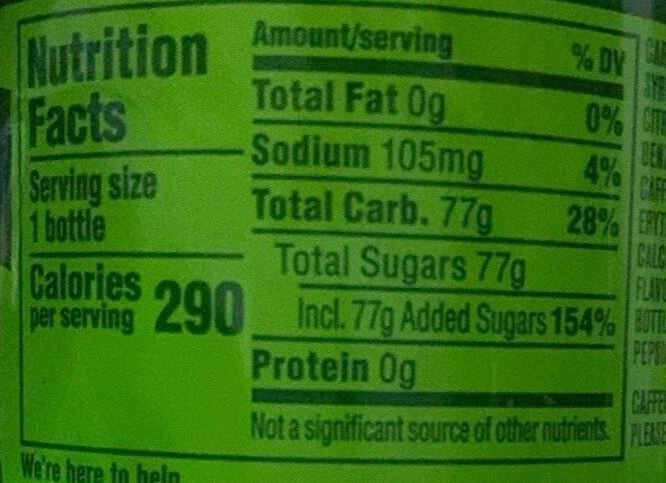
So my first “wise” post will be regarding sodas, soft drinks, or pop. I was at Food Lion Sunday after church with my daughter and we were waiting in line. I grabbed a Mountain Dew to look at the “nutrition facts”. Nutrition being a loosely worded. A typical American diet needs 200-300 grams of NATURAL sugar or carbs a day. But ADDED sugar (the white stuff they pour in) should only account for about 20 grams of carbs. Mountain Dew is all ADDED sugar, sugar that it is not from it’s original source– meaning they didn’t cut down a Mountain Dew tree to make it! 🙂 A NATURAL sugar or carb source would be whole grains or honey. That’s the difference! So in one 20 oz. Mountain Dew you have 154% or 77g of your daily value (DV) of added sugar!! That’s a day and a half of sugar in one bottle. Now, if you add that to a Little Debbie, candy bar, or ice cream, your ADDED sugar for the day really ADDS up! This adds weight and heart disease. Simply cutting out your sodas can sometimes reduce your weight by as much as 20 pounds! But don’t jump to sugar-free, there are dangers with those as well-more to come! Now you are sugar wise!
Hello World!
Welcome to my blog! This is my first post–hopefully someone will read it! So the biggest question is WHY am I doing this? After being in nursing for almost 30 years, I have realized that education is the most fundamental job I have! I educate all the time, every single day! A lot of what I tell my patients, is very basic and often very new information to them. So I thought, maybe people just don’t know! But maybe I can help them! Because I have all the time in the world!! 🙂 No because, I think small bits of information can go a long way! This information will all be sourced from reputable sources, easy to read and digest, and should be meaningful to everyday life. Of course, my disclaimer is, YOUR primary care provider should be the ultimate source of any medical advice. I am NOT dispensing it! Just providing helpful, healthful, FACTS, on healthier living! I was always that nerdy kid who loved to read the Farmer’s Almanac trivia from front to back as a child! I do hope you get something out of this and share it with friends! Enjoy……hopefully, Maybe!!! 🙂 Also, you can hit me up for any suggestions for topics at sonya@wellforthewise.com or below in the comments……

 Becoming Wellness Wise